Are your levels of magnesium up to snuff? Turns out being deficient in magnesium could do a lot more than cause muscle cramps.
Magnesium is required for proper electrical signaling within the heart muscle and helps stabilize a normal rhythm. Deficiency of the mineral has been shown to increase arterial stiffness, spiking blood pressure and increasing the work load of the heart, directly impacting cardiovascular health and mortality. In fact, researchers from Japan published the results of a study which found that increased intakes of magnesium in the diet may reduce the risk of cardiovascular mortality by 50 percent. Low Magnesium Intake Creates an Imbalance with Calcium Leading to Arterial Stiffness
Prior research works have determined that low magnesium levels are the best predictor of heart disease, contrary to the traditional belief that cholesterol or saturated fats play the biggest role. In a cohort of studies spanning the past forty years, scientists have found that low magnesium levels are linked with all known cardiovascular risk factors including high blood pressure, arterial plaque build-up, calcification of soft tissues, excess cholesterol levels and hardening of the arteries.
Researchers determined that decades of elevated calcium intake have not been balanced with increasing magnesium intake and consequently in the US, dietary calcium-to-magnesium ratios are increasingly unbalanced. Many people have been led to believe that they need to take copious amounts of supplemental calcium to maintain bone health, when in reality they are developing a homeostatic imbalance of the two minerals and dramatically increasing their risk of arterial stiffness, early cardiovascular disease and death. Sponsored Link Get 400 mg of magnesium made with mixed sources of magnesium for optimum absorption and utilization within the body. Monitor Daily Magnesium Consumption and Supplement as Necessary to Improve Cardiovascular Health
Dr. Carloyn Dean, Medical Advisor of the Nutritional Magnesium Association, concluded, “…heart disease is still the number one killer in America, in spite of over two decades of statin use. The fact that low levels of magnesium are associated with all the risk factors and symptoms of heart disease, hypertension, diabetes, high cholesterol, heart arrhythmia, angina and heart attack can no longer be ignored; the evidence is much too compelling.” The authors note that nuts and legumes are an excellent natural source of magnesium, yet many people avoid them due to the misconception that they are unhealthy due to the high fat content. Also read Prevention Is the Key! Here Are the Top 10 Supplements for Heart Health
Magnesium is a ubiquitous mineral that has been found in abundance in the human diet for countless generations. Over the past half century, this essential nutrient has been systematically weaned from the vast majority of leafy greens and vegetables, due to poor soil conditions and the rapid rise in the consumption of processed foods where any required nutrients have been removed in favor of added sugars, fats, artificial flavors and coloring, which is why supplemental magnesium may be beneficial.
Daily requirements for magnesium are 320 mg for women and 420 mg for men, yet many people take in less than half of these minimum amounts leading to a significant deficiency over time. Health-conscious individuals will optimize their diet, or supplement with a blended magnesium formulation to assure a daily intake of 400 to 500 mg. Further, it may be necessary to limit or eliminate calcium supplementation to maintain proper calcium to magnesium balance and dramatically lower the risk of heart disease and early death.
John Phillip is a Certified Nutritional Consultant and diet, health and nutrition researcher and author with a passion for understanding weight loss challenges and encouraging health modification through natural diet, lifestyle and targeted supplementation. John’s passion is to research and write about the cutting edge alternative health technologies that affect our lives. Discover the latest alternative health news concerning diabetes, heart disease, cancer, dementia and weight loss at My Optimal Health Resource
Sustained Elevated Cardiac Output Can 'Tear Apart' Your Heart Tissue
As you can see from the above studies, the research is converging around the considerable risks that high endurance cardio-type exercises pose for your heart. When you engage in this type of training, your heart doesn't have much say in the matter, as it simply responds to biochemical signals from your body to ramp up cardiac output in order to keep up with your level of exertion. You can’t feel its pain until very late in the game, and at that point, it may be a life-threatening situation.
Extreme exercise causes your heart to massively increase cardiac output, which it may have to sustain for several hours, depending on the duration and intensity of your activity.
Your heart pumps about five quarts of blood per minute when you’re sitting. But when you’re running, it goes up to 25 to 30 quarts, and it wasn't designed to do this for hours on end, day after day. It enters a state of volume overload that stretches the walls of your heart muscle, literally breaking fibers apart.
The problem is, many endurance athletes don’t allow their bodies to fully recover between sessions. They often live in a perpetual post-workout state, which basically resembles chronic oxidative stress. Repeated damage to the heart muscle increases inflammation, which leads to increased plaque formation, because plaque is your body’s way of bandaging the lining of your inflamed arteries.
Over time, as more damage is inflicted, the heart enlarges hypertrophy, and forms scars cardiac fibrosis. MRIs of long-time marathoners reveal abundant scarring all over their hearts. Scientists have also measured elevated cardiac enzyme levels after extreme exercise just like after a heart attack, which can only mean one thing: this type of exercise is damaging people’s hearts.
. According to a study presented at the Canadian Cardiovascular Congress 2010 in Montreal, regular exercise reduces cardiovascular risk by a factor of two or three, but the extended vigorous exercise performed during a marathon raises your cardiac risk seven-fold!
2. In a 2011 study published in the Journal of Applied Physiology, researchers recruited a group of extremely fit older men, all members of the 100 Marathon club (having completed a minimum of 100 marathons). Half of the men showed heart muscle scarring as a result of their endurance running—specifically, the half who had trained the longest and hardest. If running marathons provided cardiovascular benefit, this group would have had the healthiest hearts!3
3. A 2011 rat study published in the journal Circulation was designed to mimic the strenuous daily exercise load of serious marathoners over the course of 10 years. All the rats had normal, healthy hearts at the outset of the study, but by the end, most of them had developed "diffuse scarring and some structural changes, similar to the changes seen in the human endurance athletes."4
4. A 2012 study in the European Heart Journal found that long-term endurance athletes suffer from diminished function of the right ventricle of the heart and increased cardiac enzymes (markers for heart injury) after endurance racing, which may activate platelet formation and clotting. Twelve percent of the athletes had detectable scar tissue on their heart muscle one week post-race.5
5. A 2010 study presented by the American College of Cardiology showed that endurance runners have more calcified plaque in their arteries (which also increases stroke and dementia risk) than those who are not endurance athletes.6
6. A 2011 German study revealed a very high incidence of carotid and peripheral atherosclerosis among male marathon runners.7
7. A 2006 study screened 60 non-elite participants of the 2004 and 2005 Boston Marathons, using echocardiography and serum biomarkers. Researchers found decreased right ventricular systolic function in the runners, caused by an increase in inflammation and a decrease in blood flow.8
8. Research by Dr. Arthur Siegel, director of Internal Medicine at Harvard's McLean Hospital, also found that long-distance running leads to high levels of inflammation that may trigger cardiac events.9
I am convinced that the effect of this amrita-modified blood on the heart is what is historically called the Solar Heart. It is also undoubtedly the specific alchemy behind spiritual sovereignty or the growth of the soul of the individual. Here is a similar intuition of the Heart Nova Consciousness has traditionally been understood to have three basic states, or avasthas in Sanskrit. These are the states of waking, dreaming, and deep sleep.
The left side of the heart is the seat of the waking state, and bodily experience. Body
The middle of the heart is the seat of the dreaming state, and all that is the deeper psyche or subtle dimension and higher mind. Mind
The right side of the heart is the seat of the deep sleep state, and the seat of the
Our EMOTIONS are what connect us to the broader universe and the energetics that radiate from First Source. When one lives a love-centered life, practicing the six heart virtues to the best of their abilities in the smallest nooks and crannies of their life, they unfold around themselves an antenna. This antenna is etheric. In other words, it exists in a state of energy that our eyes and ears do not detect. And it's designed like a finely tuned instrument that both receives and transmits the radiations of the higher frequencies from First Source. So this antenna surrounds our human instrument, occupying the same space as our body, and yet because it's composed of light frequencies of a high nature, it's not bound to the reality and limitations of the third dimension like our physical body, for instance.
When our hearts are relaxed, loving and understanding, appreciative, trusting, the etheric antenna becomes... becomes receptive like a flower opening its petals to the sun.
If our heart is anxious, troubled, angry, or tumultuous, the same antenna, similar to the way a sensitive plant closes its petals at sunset, passes into disorder and its fine-grain connection to the higher frequency radiations of First Source are cut off or diminished.
This etheric antenna, from a biological standpoint, is anchored in the seven glands of the endocrine system which act as receptors to translate the higher frequencies of the Spirit domain to the body and mind, so that the mind can process the encoded information and the body can act upon it.
Our endocrine system is integrated with our Nervous/communication system...that is why the Egyptians kept the 'organs' in canopic jars during the mummification process. The mind is in the heart...
The heart represents the seat of feeling and affection Then I will give them one heart, and I will put a new spirit within them, and take the stony heart out of their flesh, and give them a heart of flesh The day will come when we will all have "a true heart He will create this clean heart in us as we follow the righteous example of His Son.
The heart is a muscle, as love can hurt it can heal. Exercise your heart and its incredible capacity for love. It will show you things you may have never been able to see before.~
Everything becomes spiritual once this door of the chamber of the heart is open. If a man is a musician, then his music is celestial. If he is a poet, then his poetry is spiritual. If he is an artist, then his art is a spiritual work. Whatever he may do in life that divine spirit manifests. He need not be a religious person, he need not be a philosopher, he need not be a mystic. It is simply that what was hidden in him and thereby was keeping his life incomplete begins to manifest to view, and that makes his life perfect. #heart #love
CMR works on increasing the conscious and vibratory connection between the heart and the sympathetic trunk running either side of the spine on the neck and thorax. It is the only thing I have found to get rid of brain scatter and to unlock the neck and shoulders from the inside out.
The heart is used as a holographic release mechanism for both left and right side so you are always using the heart. The heart is primary in the body, even prior to the brain...it dictates everything thus you go to it to release any area of the body you may need to work on. Or anything else in your life for that matter. The heart is a hologram for the entire neuro-musculature of the body. CMR is a neurological jumper-cable technique using the heart as a holographic key to unlock the muscles of the neck and shoulders and to take the static off the nervous system. It entrains and relaxes the heart, breathing, metabolism and brain, unlocking the neuromuscular system from the inside out as such it is way more effective, profound and lasting than massage.
CMR is a simple technique that opens the neck shoulders heart and turns off the fight flight and removes static from the central nervous system so current consciousness can flow with less friction and greater efficiency. CMR is very useful to move through any fear or resistance as our contraction becomes tangibly felt and we progressively melt into a deeper sentient experience of our existence.
This technique can be self-administered and is useful for improving concentration, to take the static off the nervous system, prior to meditation, headaches, processing emotions, insomnia, and to relieve muscle pain and tension. The effects are accumulative over time and will permanently rewire the nervous system from more primitive reptilian function toward a more spiritual and less reactive condition. Done as a daily practice it is both preventative and restorative.
Car crash victims and others with PTSD will find this technique invaluable for getting relief from an overactive sympathic nervous system HPA axis. When working on the muscles that are involved in the vigilance to danger the neck, shoulders and jaw I often find that electrical energy and spasms occur in the legs. Showing that the ego socialization structure of the brain that is also associated with the vigilance muscles is inhibiting the full release of the charge from fight flight. Normally an animal would run after it comes out of its freeze response. We humans however do not remember to run off the charge generated by exposure to the tiger of daily existence.
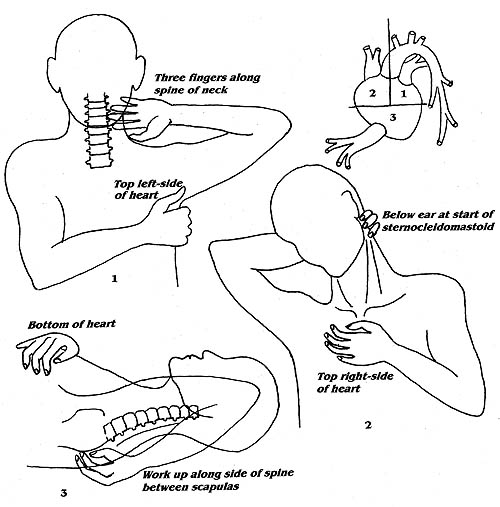
Figure 4: Cardio Muscular Release
The heart is divided into three sections: left-top=1, right-top=2, bottom=3. There are three holding positions on the left side of the body then the three are mirrored on the right side.
Position 1: The three middle fingers of the left hand are placed along side left of the spine on the back of the neck; the right hand is placed on the left of the heart. Hold 5 minutes breathing gently into the belly.
Position 2: The head is turned to the right, and the right hand reaches behind the neck and holds the left neck at the point where the sternocloidomastoid muscles joins the skull just under the left ear. Left hand is on the right-side of the heart at the middle of the chest. Hold 5 minutes, continuing to belly breathe. Anywhere and everywhere on this muscle needs to be held in the jumpercable with the heart, because it is invariably tight and painful on most people. To get at the whole muscle I find it useful to use the fingers of the opposite hand for the top end of the muscle and then the thumb of the same side of the body as you work down the muscle.
Position 3: The left hand reaches up over the shoulder and down the back and the fingers poke into the muscles alongside the spine between the scapulars. The right hand is on the bottom of the heart. Hold 5 minutes, deep breathing; slide left hand slowly up the back over the course of the 5 minutes.
Repeat in mirror fashion on the other side of the body. Note all positions must be held for a full release to occur, otherwise one will still feel some disconnection and static. The key is to remain present and sensitive throughout the process. If you feel you need longer than a half hour practice either hold each position longer, or cycle a second time round. Meditation and toning done along with CMR offers a synergistic effect. More CMR information.
Many of the changes in bodily function that occur during the coherence state revolve around changes in the heart’s pattern of activity. While the heart is certainly a remarkable pump, interestingly, it is only relatively recently in the course of human history around the past three centuries or so that the heart’s function has been defined by Western scientific thought as only that of pumping blood. Historically, in almost every culture of the world, the heart was ascribed a far more multifaceted role in the human system, being regarded as a source of wisdom, spiritual insight, thought, and emotion. Intriguingly, scientific research over the past several decades has begun to provide evidence that many of these long-surviving associations may well be more than simply metaphorical. These developments have led science to once again to revise and expand its understanding of the heart and the role of this amazing organ.
In the new field of neurocardiology, for example, scientists have discovered that the heart possesses its own intrinsic nervous system a network of nerves so functionally sophisticated as to earn the description of a heart brain. Containing over 40,000 neurons, this little brain gives the heart the ability to independently sense, process information, make decisions, and even to demonstrate a type of learning and memory. In essence, it appears that the heart is truly an intelligent system. Research has also revealed that the heart is a hormonal gland, manufacturing and secreting numerous hormones and neurotransmitters that profoundly affect brain and body function. Among the hormones the heart produces is oxytocin well known as the love or bonding hormone. Science has only begun to understand the effects of the electromagnetic fields produced by the heart, but there is evidence that the information contained in the heart’s powerful field may play a vital synchronizing role in the human body and that it may affect others around us as well.
Research has also shown that the heart is a key component of the emotional system. Scientists now understand that the heart not only responds to emotion, but that the signals generated by its rhythmic activity actually play a major part in determining the quality of our emotional experience from moment to moment. As described next, these heart signals also profoundly impact perception and cognitive function by virtue of the heart’s extensive communication network with the brain. Finally, rigorous electrophysiological studies conducted at the Institute of Heart Math have even indicated that the heart appears to play a key role in intuition. Although there is much yet to be understood, it appears that the age old associations of the heart with thought, feeling, and insight may indeed have a basis in science.
Increases in heart disease risk factors may decrease brain function May 02, 2013
Increases in heart disease risk factors may decrease brain function. The association between the two was noted in young and middle-age adults as well as the elderly. Smoking and diabetes were especially linked with reduced brain function.
DALLAS, May 2, 2013 — Brain function in adults as young as 35 may decline as their heart disease risk factors increase, according to new research in the American Heart Association journal Stroke.
“Young adults may think the consequences of smoking or being overweight are years down the road, but they aren’t,” said Hanneke Joosten, M.D., lead author and nephrology fellow at the University Medical Center in Groningen, The Netherlands.
“Most people know the negative effects of heart risk factors such as heart attack, stroke and renal impairment, but they do not realize it affects cognitive health. What’s bad for the heart is also bad for the brain.”
The Dutch study included 3,778 participants 35- to 82-years-old who underwent cognitive function tests that measure the ability to plan and reason and to initiate and switch tasks. A separate test gauged memory function. The Framingham Risk Score determined their risk for cardiovascular events in the next 10 years.
Researchers found: Participants with the most heart disease risks performed 50 percent worse on cognitive tests as compared to participants with the lowest risk profile. The overall Framingham Risk Score, age, diabetes, bad cholesterol and smoking were negatively linked to poor cognitive scores. Compared to non-smoking participants, those who smoked one to 15 cigarettes daily had a decrease in cognitive score of 2.41 points and those smoking more than 16 cigarettes daily had a decrease of 3.43 points. The memory scores had a similar association. Two risk factors — smoking and diabetes — were strong determinants of cognitive function.
“There clearly is a dose response among smokers, with heavy smokers having a lower cognitive function than light or non-smokers,” Joosten said. “It is likely that smoking cessation has a beneficial effect on cognitive function.”
Health professionals need to be aware of cognitive function in patients with risk factors for cardiovascular disease. Cardiovascular risk factors, especially those that are modifiable like smoking and obesity, need ongoing attention from the medical profession, government and food industry, she said. “Smoking cessation programs might not only prevent cancer, stroke and cardiovascular events, but also cognitive damage.”
Co-authors are Marlise E.A. van Eersel, M.D.; Ron T. Gansevoort, M.D., Ph.D.; Henk J.G. Bilo, M.D., Ph.D.; Joris P.J. Slaets, M.D., Ph.D.; and Gerbrand J. Izaks, M.D., Ph.D. Author disclosures are on the manuscript.
The Dutch Alzheimer Foundation and Dutch Kidney Foundation funded the study.
For the latest heart and stroke news, follow @HeartNews on Twitter.
For stroke science, follow Stroke at @StrokeAHA_ASA.
Statements and conclusions of study authors published in American Heart Association scientific journals are solely those of the study authors and do not necessarily reflect the association’s policy or position. The association makes no representation or guarantee as to their accuracy or reliability. The association receives funding primarily from individuals; foundations and corporations (including pharmaceutical, device manufacturers and other companies) also make donations and fund specific association programs and events. The association has strict policies to prevent these relationships from influencing the science content. Revenues from pharmaceutical and device corporations are available at www.heart.org/corporatefunding.
The Heart, the Tiny Chamber of the Heart. The Holiest of Places. ♥
The Heart is more established than the brain, the Heart is older. When the Human Conception begins, there is a sphere, which is the ovum, sperm comes in and conception takes place through vitosis then it divides into 2, then into 4 and forms a Perfect Tetrahedron and it comes into 8 and becomes a Star Tetrahedron, which is a cube. which is the key to the Merkabah. Then it continues to grow to a form of sliced apple = heart shaped if you will that is hollow inside and they found that this SHAPE HAS 512 cells =)))))))))))))) and nothing else exists for a while but this Heart with 512 cells. Then the body appears. at 13 weeks of gestation the Soul comes in to Incarnate the body- and the pineal gland -very important - excretes a lot of DMT at this stage.
Through Pyramedical research and the study of the Sacred Books they say that what exists, at first, in our mother's womb is a heart and nothing else. Then our bodies come out of this heart. This is why the Heart is older than the brain. BUT... the first part that emerges out the Heart is the TIP OF OUR TONGUES and the rest of the body follows, tucking the Heart inside of us. The tip of the tongue is DIRECTLY connected to the Sacred Place and Tiny Chamber, which is the Holiest of Places- on our Hearts. That is why you have Meditative exercises to put your tongue on the roof of your mouth to stimulate certain glands pineal pituitary-thalamus, understand that the Thalamus has two channels that go down to two Chakras of the Heart. The upper one is related to the right brain Arts-Love-Compassion... the second one is related directly to the Heart... no brain connection. So the tongue massages a very specific spot which causes a sexual stimulation Kundalini between the Heart and the brain that stimulates the Thalamus and begins to fire Alpha in the 4 lobes of the brain, when the Alpha reaches a certain level of fire-ring, this green light will appear, that is talked about all the way back to the Vedas, 6,000 years ago... then a lot happens which would be again too long to explain, but basically you have 8 beams of light coming out of your head to form a halo, yes we all have one- you need to activate your beams of Light and have your brain connected to your Heart for everything to form the Halo when this with specific breathing. This is all scientifically documented. We are pure Creators, because Love loves us. ONE MIND, ONE THOUGHT, ONE LOVE SUPREME IN ALL OF US, -THROUGH ALL OF US. Google Plus Back Link
Not too long ago, it was believed that cardiac tissue was uniquely incapable of being regenerated. A new, but rapidly growing body of experimental research now indicates that this is simply not true, and there is a class of heart-tissue regenerating compounds known as neocardiogenic substances. Neocardiogenic substances are able to stimulate the formation of cardiac progenitor cells which can differentiate into healthy heart tissue, and they include the following
Resveratrol Siberian Ginseng (Eleuthero) Red Wine Extract Geum Japonicum N-acetyl-cysteine
Another remarkable example of cardiac cell regeneration is through what is known as fetomaternal trafficking of stem cells through the placenta. In a recent article we discussed the amazing process known as fetal microchimerism by which the fetus contributes stem cells to the mother which are capable of regenerating her damaged heart cells, and possibly a wide range of other cell types.
One of the most enduring of the Glastonbury traditions relates to Joseph’s staff. Arriving on Wearyall Hill overlooking Glastonbury, Joseph thrust his staff into the ground. Thereupon, it flowered. Though a Puritan chopped the old tree down and was blinded when a splinter flew up while he was chopping, cuttings of the tree survive and it is a most amazing tree. It is a hawthorn which flowers twice a year, once in the spring and again on Christmas Day. What is particularly interesting is that seeds from the tree do not produce a tree of the exact same type. The only way to reproduce the flowering hawthorn of Glastonbury is by cuttings. One may be found today within the old abbey enclosure, and another in the churchyard of the Anglican parish church in town. Yet another grows on Mount St. Alban, in Washington, D.C., by the National Cathedral all propagated by cuttings from the original tree and its descendants Botanical Name of Hawthorn Tree Crataegus oxycantha, from the Greek, kratos, meaning hard, and oxus, meaning sharp, and akantha, meaning "a thorn".
Other Common Names: Hagedorn, Haw, Hazels, Gazels, Ladies Meat, Bread and Cheese Tree , Mayblossom, Hedgethorn, Maybush, Mayflower, Whitethorn.
Habitat: Hawthorn is usually grown from cuttings as the seed can take eighteen months to germinate. This woody tree grows in temperate regions in the Northern Hemisphere. And as one of its common names implies, Hawthorn is often used as a hedge.
Plant Description: The Hawthorn tree grows to a considerable height of 10m, and is known to live to a great age. The white rose like flowers attract carrion insects, such as flies, as the pungent smell of decomposition is a factor in the flower’s aroma. The red fruit is rich in bioflavonoids and is the most common part employed in herbal medicine. Historically, Hawthorn was used as a food as much as a medicine, although today its reputation is as a circulatory tonic.
Plant Parts Used Dried haws or berries, green stems and leaves.
Therapeutic Uses and Benefits of Hawthorn
Hawthorn is primarily used to treat heart disease and its associated illnesses like angina pectoris. Like many heart herbs, Hawthorn improves stroke volume by increasing the amount of blood per heart beat. Blood flow becomes greater as the heart muscle produces a stronger contraction. The Hawthorn tree is also used to treat irregular heartbeat arrhythmia and as a result, Hawthorn increases blood flow to all areas of the body while improving circulation by dilating the blood vessels. The rich bioflavonoid content of Hawthorn berries assists the circulatory system by strengthening and toning the smooth muscle that makes up the arterial walls, helping to reduce the risk of stroke and aneuryism. There are many phytochemicals in Hawthorn, the most important being crataegus acid which is responsible for the vasodilating effect on the arterial walls; while it is the procyanthocyanidins found in Hawthorn that are associated with its beneficial effects on the heart. One German study into Hawthorn indicated that this herb normalizes blood pressure, not only to treat high blood pressure but to increase blood pressure that is too low. Hawthorn also has a secondary action as a diuretic, a common symptom of heart failure.
Dosage and Administration
Recommended dosage of Hawthorn is 300 to 500mg daily however improvement will not be noted for six weeks after commencing treatment. It is important to have a medical professional prescribe your individual dose of this herb as it must be taken with a focus on its interaction with other medications. High doses of Hawthorn will act to decrease cardiac output and lower doses will increase cardiac output.
Side Effects and Possible Interactions of The Hawthorn Tree
It is essential to consult your health care professional when altering medications and you should thoroughly investigate how your medications may interact with each other. This is especially important when looking at synthetic heart medications and Hawthorn. Other medications that may interfere with Hawthorn are Asthma medications, Viagra and Clonidine and other cardiac herbs. Pregnant women are advised to avoid Hawthorn as it may increase the risk of miscarriage and there is little information on the effects of this herb on babies and young children. Other side effects of Hawthorn are dizziness, insomnia, sweating and digestive upsets.
Many believe that conscious awareness originates in the brain alone. Recent scientific research suggests that consciousness actually emerges from the brain and body acting together. A growing body of evidence suggests that the heart plays a particularly significant role in this process.
Far more than a simple pump, as was once believed, the heart is now recognized by scientists as a highly complex system with its own functional “brain.”
Research in the new discipline of neurocardiology shows that the heart is a sensory organ and a sophisticated center for receiving and processing information. The nervous system within the heart (or “heart brain”) enables it to learn, remember, and make functional decisions independent of the brain’s cerebral cortex.
Moreover, numerous experiments have demonstrated that the signals the heart continuously sends to the brain influence the function of higher brain centers involved in perception, cognition, and emotional processing.
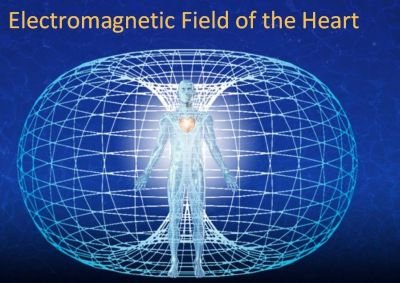
In addition to the extensive neural communication network linking the heart with the brain and body, the heart also communicates information to the brain and throughout the body via electromagnetic field interactions. The heart generates the body’s most powerful and most extensive rhythmic electromagnetic field.Compared to the electromagnetic field produced by the brain, the electrical component of the heart’s field is about 60 times greater in amplitude, and permeates every cell in the body. The magnetic component is approximately 5000 times stronger than the brain’s magnetic field and can be detected several feet away from the body with sensitive magnetometers.
The heart generates a continuous series of electromagnetic pulses in which the time interval between each beat varies in a dynamic and complex manner. The heart’s ever-present rhythmic field has a powerful influence on processes throughout the body. We have demonstrated, for example, that brain rhythms naturally synchronize to the heart’s rhythmic activity, and also that during sustained feelings of love or appreciation, the blood pressure and respiratory rhythms, among other oscillatory systems, entrain to the heart’s rhythm.
We propose that the heart’s field acts as a carrier wave for information that provides a global synchronizing signal for the entire body. Specifically, we suggest that as pulsing waves of energy radiate out from the heart, they interact with organs and other structures. The waves encode or record the features and dynamic activity of these structures in patterns of energy wave forms that are distributed throughout the body. In this way, the encoded information acts to in-form (literally, give shape to) the activity of all bodily functions to coordinate and synchronize processes in the body as a whole. This perspective requires an energetic concept of information, in which patterns of organization are enfolded into waves of energy of system activity distributed throughout the system as a whole.
Basic research at the Institute of HeartMath shows that information pertaining to a person’s emotional state is also communicated throughout the body via the heart’s electromagnetic field. The rhythmic beating patterns of the heart change significantly as we experience different emotions. Negative emotions, such as anger or frustration, are associated with an erratic, disordered, incoherent pattern in the heart’s rhythms. In contrast, positive emotions, such as love or appreciation, are associated with a smooth, ordered, coherent pattern in the heart’s rhythmic activity. In turn, these changes in the heart’s beating patterns create corresponding changes in the structure of the electromagnetic field radiated by the heart, measurable by a technique called spectral analysis.
More specifically, we have demonstrated that sustained positive emotions appear to give rise to a distinct mode of functioning, which we call psychophysiological coherence. During this mode, heart rhythms exhibit a sine wave like pattern and the heart’s electromagnetic field becomes correspondingly more organized. At the physiological level, this mode is characterized by increased efficiency and harmony in the activity and interactions of the body’s systems.
Psychologically, this mode is linked with a notable reduction in internal mental dialogue, reduced perceptions of stress, increased emotional balance, and enhanced mental clarity, intuitive discernment, and cognitive performance.
In sum, our research suggests that psychophysiological coherence is important in enhancing consciousness both for the body’s sensory awareness of the information required to execute and coordinate physiological function, and also to optimize emotional stability, mental function, and intentional action. Furthermore, as we see next, there is experimental evidence that psychophysiological coherence may increase our awareness of and sensitivity to others around us. The Institute of Heart Math has created practical technologies and tools that all people can use to increase coherence.
HEART FIELD INTERACTIONS BETWEEN INDIVIDUALS
Most people think of social communication solely in terms of overt signals expressed through language, voice qualities, gestures, facial expressions, and body movements. However, there is now evidence that a subtle yet influential electromagnetic or “energetic” communication system operates just below our conscious awareness. Energetic interactions likely contribute to the “magnetic” attractions or repulsions that occur between individuals, and also affect social exchanges and relationships. Moreover, it appears that the heart’s field plays an important role in communicating physiological, psychological, and social information between individuals.
Experiments conducted at the Institute of HeartMath have found remarkable evidence that the heart’s electromagnetic field can transmit information between people. We have been able to measure an exchange of heart energy between individuals up to 5 feet apart. We have also found that one person’s brain waves can actually synchronize to another person’s heart. Furthermore, when an individual is generating a coherent heart rhythm, synchronization between that person’s brain waves and another person’s heartbeat is more likely to occur. These findings have intriguing implications, suggesting that individuals in a psychophysiologically coherent state become more aware of the information encoded in the heart fields of those around them.
The results of these experiments have led us to infer that the nervous system acts as an “antenna,” which is tuned to and responds to the electromagnetic fields produced by the hearts of other individuals. We believe this capacity for exchange of energetic information is an innate ability that heightens awareness and mediates important aspects of true empathy and sensitivity to others Furthermore, we have observed that this energetic communication ability can be intentionally enhanced, producing a much deeper level of nonverbal communication, understanding, and connection between people.
There is also intriguing evidence that heart field interactions can occur between people and animals.
In short, energetic communication via the heart field facilitates development of an expanded consciousness in relation to our social world.
THE HEART’S FIELD AND INTUITION
There are also new data suggesting that the heart’s field is directly involved in intuitive perception, through its coupling to an energetic information field outside the bounds of space and time. Using a rigorous experimental design, we found compelling evidence that both the heart and brain receive and respond to information about a future event before the event actually happens. Even more surprising was our finding that the heart appears to receive this “intuitive” information before the brain. This suggests that the heart’s field may be linked to a more subtle energetic field that contains information on objects and events remote in space or ahead in time.
Called by Karl Pribram and others the “spectral domain,” this is a fundamental order of potential energy that enfolds space and time, and is thought to be the basis for our consciousness of “the whole.”
Recall the small accumulation of cells that starts moving on the left side of the 22-day-old fetus. That first movement signals a heartbeat. This collection of cells will now not stop moving for a long time. It will never grow tired. It will beat around 70 times a minute, some 35 million times a year, and some 2 trillion times during an average lifespan. It will pump a total of some 227 million liters (59,970,000 gallons) of blood throughout its owner's life.
This astonishing amount could fill a 10-ton tanker in a day, or 100 full-capacity swimming pools in a lifetime.And this extraordinary pump seldom misses a beat from its rhythm, and never goes wrong and becomes old. It never loses its ability to pump blood throughout the body until the death of its owner. That is because this is an extraordinary miracle of God, Who is able to create a superior artistry, flawlessness, an incomparable balance and magnificent intelligence all at once.
The embryonic heart begins developing from the third week of pregnancy, and works as a single pump for the embryo's blood, which circulates only in the baby's body and the placenta. After birth, however, since oxygen is inhaled directly by means of respiration, the embryonic heart needs to possess four chambers. This physiological dichotomy has been resolved thus: Two holes in the chambers of the heart enable blood to be retained in these chambers and the as-yet-undeveloped pulmonary veins are protected. When the baby takes its first breath and begins crying, these holes automatically close and cease their function. This marvel of creation once again shows to us the flawlessness of our Lord's creation. The fetus's heart begins beating hours before there is any blood to pump. But why should this organ start functioning before the blood is formed? The reason is the need for nutrients. The emerging embryo requires nutrients, oxygen and hormones in order to develop. In the tiny embryo, there are also waste products that have to be carried away. Therefore, this magnificent pump inspired by God suddenly begins its independent and flawless motion at just the right time and place.
Every detail in this great miracle is sufficient for a person to have faith and see the evident proofs of God's existence. A most special creation prevails in all the features of the heart. Independently of all the other miraculous systems in the body, the heart is by itself a major example of creation in our bodies. No comparable mechanism to keep a human being alive has ever been developed. With the cells that comprise it, its special valve systems and the ordered way these open and close, the heart is a most complex system with many attributes. No other organ can do anything like the job it does to keep pumping blood in a particularly powerful way. As long as blood is still present, the heart can even keep beating outside the body. THE INVISIBLE SOURCE OF CONSCIOUSNESS A nerve cell in the body acts with amazing intelligence. However, to call a nerve cell intelligent doesn't imply that it possesses the intelligence. The reason of the amazing consciousness in body cells is the inspiration they take from God. As the systems in the human body go about their work, they also assume responsibility for the coordination, order and organization of these tasks. That is why we describe structures in the body as intelligent and why we seek to account for the source of that intelligence. No doubt, the term intelligent cell or intelligent organ is a metaphor, because cells or tissues with no brain or nervous system cannot have their own consciousness. Yet an astonishing consciousness does emerge in everything they do. This represents an insoluble dilemma for Darwinists and all materialists, who maintain that consciousness is born from the cells in the brain and the chemical reactions among those cells. In short, according to the materialist claims, consciousness consists of the brain.
Though materialists attempt to reduce consciousness to the brain, scientific observations show that even living things with no brains possess consciousness. The intelligent cells examined throughout the course of this site are just one example. In recent years, observations of bacteria and other single-celled organisms have shown that these microscopic entities literally evaluate their surroundings in an exceedingly intelligent manner and make appropriate decisions. The molecular biologist Michael Denton writes:
The amoeba, although the size of a small speck of dust, exhibits behavioral strategies which seem objectively indistinguishable from those of animals far higher up the scale. If an amoeba were the size of a cat, we would probably impute to it the same level of intelligence as we do to a mammal. Just how do such minute organisms integrate all the information necessary to make such apparently calculated intelligent decisions? … the way it [the amoeba] integrates all the information necessary to pursue its prey, its decision to change direction, its persistence in the pursuit when its prey escapes, the sudden breakout of the smaller amoeba from its imprisonment in the interior of its captor at the moment when the wall of protoplasm was at its thinnest—all this remains to be fully explained in molecular terms.
The final sentence of the above account is particularly notable. Amoebas' behavior cannot be explained at the molecular level, in terms of chemical reactions and physical effects. These living things decide and act as conscious entities, even though they possess neither brain nor nervous system. They are merely cells consisting of protein, fat and water. There are other examples revealing the intelligent behavior of bacteria. According to a report in the July, 1999, edition of the French scientific journal Science et Vie "Science and Life", bacteria communicate with one another and make decisions based on those communications. Science et Vie emphasizes that this communication takes place by means of a very complex system. On their surfaces, bacteria have mechanisms that emit and receive electrical signals. In this way, they send one another signals, and transmit information about the features of their environment and the food situation therein. On the basis of that information, they then decide whether to multiply and when to stop doing so.
In short, tiny living things too small to be seen with the naked eye, collect information about their surroundings, transmit this information to one other, and later still as a group determine a particular course of action.
All these examples show the presence of a consciousness that can never be reduced to matter. From human beings, regarded as the most complex living things, to single-celled creatures, regarded as the simplest, there is an astonishing consciousness that reaches far beyond mere matter. The intelligence that appears in the cells in the human body or of any organism is a manifestation of God's absolute dominion over living things. God reveals Himself by means of the entities He creates, and human beings can witness and appreciate His infinite power and might by considering these works. In listing the examples of consciousness in this site, therefore, this important fact needs to be borne constantly in mind. By beating an average of 70 times a minute, the heart moves blood around the body some 1,000 times a day. This means that blood visits every cell in the body 1,000 times a day, carries to them the necessary nutrients, gives oxygen and takes back carbon dioxide, repairs damage, makes good defects and collects wastes. Thanks to the heart's tireless efforts, every cell in the body is "inspected" 1,000 times a day. The heart pumps 8,000 liters (2,113 gallons) of blood every day.The heart of an adult pumps 340 liters (89 gallons) of blood an hour even while sleeping. At that same rate, one could easily fill a car's gas tank in just seven minutes. Imagine that you have set up a water system that must pump out water at least on an average of 65 to 70 times a minute, to reach around 100 trillion homes, always at the same pressure. There is no doubt that the establishment of such a plant is impossible in a great many regards. Yet inside the body there is a network system incomparably more complex than this example. The vascular network, capable of reaching every cell in the body, is another proof that the body's distribution system is flawless and conscious.
The heart is a piece of muscle the size of a fist, consisting of water, fat and protein, but possessing a far more perfect and complex system than even the most advanced pump that has yet been developed by experts working with computers. This incomparable piece of flesh is powerful enough to squirt blood 2 meters (6 feet) high into the air.
Another miraculous feature is that the heart can determine the body's needs and pump just as much blood as it requires. In a person at rest, the heart pumps just 4 to 6 liters (1.057 to 1.585 gallons) of blood a minute. That quantity is enough because the resting body's cells don't require too much oxygen. If someone is exercising, however, his need for oxygen rises, and it needs to be transmitted to the cells faster. The heart immediately identifies this need and begins beating faster. During exercise, the amount of blood pumped by the heart can increase by four and seven times.
To see the perfection of these features of the heart, imagine a machine that pumps water at least once in a second, on an average of 65 to 70 times a minute. Let that water be carried to a hundred trillion homes every second by means of that pump, under the same pressure. At the same time, let that plant determine how much water each house needs and send the requisite amount to each one. In addition, make this system be able to function for at least 70 years, never develop the slightest defect, never rust, and never neglect a single pipeline leading to any of the homes in question.
How could such a system be brought into being? It is impossible to meet the needs of 100 trillion houses under the same pressure at the same time. A machine that works at such high speed and to such an unchanging rhythm cannot last any longer than 10 or 15 years. Even before then, it will have to undergo maintenance many times to make good any defects. It is impossible for such a machine to function for long years without any mistakes. It is totally illogical to claim that an ordinary piece of equipment can determine needs in houses, evaluate the situation and send the right amount of water where required.
In addition, recall that this pump you have established is under your control or that of another rational being like you. Naturally, you cannot claim that such a mechanism and its pipelines came into being by themselves over the course of thousands of years by the coming together of iron and cement, then suddenly began rhythmically pumping water, through pipelines, laid by themselves, that will reach to 100 trillion houses. Not one person would believe it. It is obvious that the system was brought into being by an intelligent being.
However, evolutionists manage to claim that such systems as the circulatory and respiratory incomparably more perfect than any artificial ones came into being as the result of blind chance. They maintain that this magnificent pump, which began its work while you were still in your mother's womb, began functioning in an uncontrolled manner, as the result of chance. They ignore the clear existence of the Almighty Force to which this matchless work belongs. Yet as we shall soon examine in detail, every feature of this miraculous organ introduces us to the superior wisdom and power of God. It is revealed in verses that: The Heart's Working Mechanism The heart possesses a most systematic system, in which a single flaw can spell the end of an individual's life. The most important of the heart's mechanisms are the pumping muscles on its right and left sides: There are atria (small pumps) and ventricles (large ones) on both sides of the heart. The heart's left side the left atrium and ventricle is responsible for distributing oxygenated blood to the organs and tissues. The heart's right side its right atrium and ventricle serves to pump the "dirty" oxygen-depleted blood to the lungs to be cleaned.
When oxygenated blood reaches the heart, it is received by the left atrium, the small upper cavity. From there it is passed to the left ventricle, the large chamber below. In a similar way, deoxygenated blood is transmitted from the right atrium to the right ventricle. Although the chambers in the heart appear different, they actually perform the same job. Both are charged with pumping the blood to a specific objective.
Arrow indicates the direction of the blood flow. When the heart contracts, blood is passed from the atria to the ventricles. The valves close. As the ventricles contract, blood is pushed out to the body. The systematic functioning of this mechanism is of great importance because all these processes have to be in order. And if it goes wrong, the heart will either pump no blood to the body, or else it will become loaded with too much blood. In order for this sequence to occur properly, the valves between the atrium and the ventricle open like a one-way gate to the flow of blood. When the atria contract, these valves open and blood enters the ventricles. After this has taken place, the valves close again to prevent the blood's return to the atria where it came from. The venae cavae bring deoxygenated blood to the right side of the heart, and the pulmonary arteries carry that blood to the lungs. The pulmonary veins bring oxygenated blood from the lungs to the left side of the heart, and the aorta sends this blood to the body. During this flow of blood, the heart valves contract, thus allowing blood to pass through the chambers. Similar valves also exist in the ventricles. When the ventricles contract, these valves open and let the blood flow directly to the body. Then the valves close, preventing the pumped blood from returning to the heart. The sound that you perceive as your heartbeat does not result from the heart's contraction and dilation, as is popularly imagined. Listening to your heartbeat, you are actually hearing the opening and closing of these four powerful valves. The heart valves open in the direction of blood flow. When the atria contract, these valves (atrioventricular valves) open and blood fills the ventricles. The valves then immediately close again to prevent any blood from flowing back where it came from. Leaving aside this flawless system's enormous complexity, even just the rhythmic opening and closing of the valves presents evolutionists with an enormous quandary. No living thing can afford to wait to come into possession of such a rhythmic order. The slightest lapse will cause terrible damage. The rhythmic opening and closing of the valves has to function splendidly even while the creature is still in the embryo phase. To maintain that such a movement came about through random mutations and functions in perfect manner in all vertebrates as the result of chance is a falsehood that no logical person can accept. The Heart Muscle Cells: the Only Ones Moving Rhythmically in the Body The cardiac muscle possesses a very special structure, in that every one of the cells comprising it can beat on its own. These cells are just like living batteries, using the electrical current that passes over them. The body consists of some 100 trillion cells, each with different functions and properties. Some, like the red blood cells, possess no nucleus. Others, like those in the windpipe, have minute hairs. Some have propulsive structures that allow them to move. Yet heart muscle cells possess an ability not found in any other in the body the ability to shrink and expand, which is why the heart, which is made up of such cells, beats. What makes the muscle cells in the heart special is the way they suddenly begin moving inside the still-developing embryo. These cells continue beating during transplant surgery, despite all the nerves connected to them having been severed and all contact with the organs around them having been eliminated. Indeed, even when you separate just one of these cells and place it under a microscope, it will continue to pulsate as long as you nourish it with blood. Despite appearing to be outside the control of any mechanism, these cells behave as if they had literally taken a decision to beat, pump blood and keep their body alive.
What allows them to beat is the electrical current that passes over them. Every cell making up the heart is literally a living battery. They themselves chemically produce the energy that powers the movement we refer to as the heartbeat. This feature of the cells is too extraordinary to be explained with any evolutionist claim. Cardiac cells provide the necessary electricity for themselves with the potassium and sodium ions that they can easily find in the blood. Each of the atoms comprising these two elements frequently loses a negatively charged electron. Consequently the atom has an extra proton, or a positive charge.
Cardiac cells possess a high concentration of potassium ions, and sodium is present in the fluid surrounding these cells. The cell membrane removes sodium from the heart muscles and takes potassium inside. Since the cell membrane removes sodium faster than it takes in potassium, an excess positive charge builds outside the cell. When it reaches a certain level, the flow suddenly reverses and sodium ions again begin entering the cells. This sudden change sets up an electrical current, and the heart cell retreats by contracting. The process that allows the cells to beat emerges through these chemical transactions. The heartbeat is regulated by a small body of specialized heart muscle tissue known as the pacemaker, or sinus node. Below, nerve networks in the ventricle. The signal for the heartbeat to start depends on one small knot of cells known as the sinus node, or SA node, in the right atrium. The electrical signal produced by this node is transmitted to the heart muscle by two small muscles. The cells pass on the electrical impulse reaching them to all the other muscle cells in the heart's lower regions. This wave of current stimulates all the muscle cells beneath, starting with the right atrium, and is thus disseminated throughout the heart. The sinus node, producing and regulating these electrical currents, is also known as the pacemaker. While controlling the rhythm, the pacemaker also reacts to the needs of the body. It possesses the ability to accelerate or decelerate the heartbeat according to the body's requirements.
The heart does not contract all at once, however, because it has to collect blood and also to pump the blood it has collected. If all cardiac cells were to contract at once, then the blood would be pumped before it had been properly collected; and as a result, only a few drops of blood could be transmitted to the body. However the blood collected by the atria must be transmitted to the ventricles, which are larger, before the latter contract. Therefore, the cardiac muscles wait for each other to contract in sequence, just as if they were aware of their own place in line. As the cardiac muscle tissue of the atrium contracts, the valve separating the atrium from the ventricle opens and allows the blood to flow downward into the ventricle. Once the ventricle is full, it contracts. But how does that sequencing manage to remain so regular?
If you examined the cardiac cells under a microscope, one by one, you would see that each one beats at a different rate. This is a most astonishing, but also a most miraculous state of affairs: Far from being a sign of any irregularity, this actually indicates an impeccable order. The heart beats in a rhythmic and synchronized way: The cells literally know when to contract and when to expand, in line with this synchronization. God has inspired in each cell the time frame in which it will beat. That's why each beats at different speeds and sequences.
When you put together two cardiac cells that beat at different rates, they immediately begin beating in rhythmic harmony through an extraordinary mechanism. When these intelligent cells come together, they all work in harmony and maintain a rhythm that will best pump the blood. This extraordinary fact is one of the blessings created by God for humanity. The flawless harmony between the cells is one of the proofs of our Lord's artistry. God is the Ruler of all, the Almighty.
A cardiogram indicating the heart's electrical activity. The heart beats rhythmically and synchronically. Thanks to this regular rhythm the body is provided with the appropriate amount of blood flow.The Heart Cells' Timing The impeccable order in the timing of the heart is brought about by coordination and communication among the cells that comprise it. Here again, of course, a striking intelligence manifests itself. These intelligent cells transmit current to the other side of the heart at a speed of approximately 60 centimeters (23.62 inches) a second. The signal is sent from the sinus node. The cells comprising the sinus node produce the signal in 1/14th of a second.
As the current moves rapidly, it passes through the two atria in turn and causes them to contract. Between the atria and ventricles of the heart, there is an area of specialized tissue, known as the AV node (atrioventricular node), that conducts the electrical impulse from the atria to the ventricles. Just as the electrical impulse is about to reach the ventricles, it is delayed by the AV node. The speed of the current falls to 20 centimeters (7.84 inches) a second and it starts being transmitted at around 1/16th of a second.
This delay is of the greatest importance. Due to that delay, before the ventricles contract, the atria are empty completely. This is the secret of the heart's synchronized action.
All praise belongs to God, the Lord of the heavens and the Lord of the Earth, Lord of all the worlds. All greatness belongs to Him in the heavens and Earth. He is the Almighty, the All-Wise.
These are not the only notable details in the heart's electrical system. One miraculous feature of this system is the sinus node that initiates the first current. In fact, the other regions of the heart possess the same ability as the sinus node, which sets the heart muscles in motion. The AV node and the Purkinje fibers, located in the inner ventricular walls, can also set the heart in motion by setting up such a current. So why is this task left solely to the sinus node? Because the current transmitted with the sinus node is significantly faster than the others. The sinus node stimulates tissues that could set up signals of their own before these signals even begin.
Because of that speed, the sinus node initiates all electrical activity. If the current were initiated at other nodes, it would lead to blood failing to reach, or being delayed in reaching, various organs.The consequences would be most serious. Indeed, if blood fails to reach the brain within 4 to 5 seconds, the individual will lose consciousness. If that lack of blood is prolonged still further, it will lead to death.
Considering all these features, you can see that the heart is a conscious organ that produces its own energy and employs it to work in a most synchronized, harmonious manner. The place where movement begins is a small node consisting of a specific quantity of cells that knows how fast it has to transmit the current. Otherwise, the heart would be unable to fulfill its function and pump blood. At the same time, the heart accurately determines the amount of the current it produces. If an immeasurably minute amount of current passes through this region in an uncontrolled manner, this will cause problems that could result in death. a) The sinus node (SA node) sends out a signal that causes the atria to contract. When this signal reaches the AV node, it sends a signal to the ventricles to contract by way of the Purkinje fibers. b) A normal ECG shows the heart is working properly. The P wave forms when the atria contract, the QRS wave when the ventricles contract, and the T wave when the ventricles are recovering from contraction. c) Abnormal ECGs: Sinus tachycardia is a rapid heartbeat due to a fast pacemaker. An irregular heartbeat occurs because of the ventricles' irregular stimulation (ventricular fibrillation). Mitral stenosis occurs because the mitral valve is obstructed. In addition, the heart is able to regulate its own synchronization. Whichever of the cardiac cells, aligned side by side, has the fastest rhythm of expansion and contraction, it keeps the others in synchronization. If this rhythm is impaired if one cell expands while another contracts then the necessary pumping will fail to take place. The heart will soon stop and death will follow in a matter of minutes.
In short, the heart consists of special cells that constantly produce energy, coordinate the blood flow, expand and contract under the inspiration they receive from God. They can regulate their own order, act with intelligence and can plan, calculate, and move quickly to take precautionary measures. The Special Network that Feeds the Heart
The heart nourishes the entire body, but like all other organs, it too needs to be nourished. Because of the intensity of its work and the fact it is such a very special organ, the heart requires large quantities of oxygen and nutrients. However, the heart muscle is too thick to absorb and benefit from food and oxygen in the blood filling its chambers. Therefore, how is this valuable organ nourished?
In addition to all the marvels of creation examined so far, the heart is also nourished by a special system that feeds it, known as the coronary circulation.
Of the blood that emerges from the heart by way of the coronary arteries, the heart itself is the first recipient. These arteries are two separate branches of the aorta carrying oxygen-rich blood from the lungs. These arteries have been created solely to feed the heart. Unlike all the other arteries, they leave the heart but then return to it, rather than going to other organs. In this way, the blood richest in oxygen is devoted to nourishing the heart, that region of the body needing the greatest amount of oxygen, without being diverted anywhere else. Since the heart's cells must turn oxygen and sugar into energy in order to be able to function, blood in the coronary arteries needs to be rich in these substances—because the heart's energy consumption is regulated according to need, and can raise four- or five-fold in a matter of seconds.
Say: "Have you thought about your partner deities, those you call upon besides God? Show me what they have created of the earth; or do they have a partnership in the heavens?" Have We given them a Book whose clear signs they follow? No indeed! The wrongdoers promise each other nothing but delusion. God keeps a firm hold on the heavens and Earth, preventing them from vanishing away. And if they vanished no one could then keep hold of them. Certainly He is Most Forbearing,
The coronary arteries are perfectly equipped for their job. These arteries entering the heart separate into much smaller branches and spread throughout the heart muscle. Every cell making up the heart has a constant need for nutrients and oxygen. As these arteries head directly for the heart, they also establish sub-connections with one another, because if any of the arteries is blocked for any reason, the heart muscle will receive no nourishment and will die. These sub-connections represent a precaution taken in the face of that very grave danger. If one artery becomes blocked, thanks to that precautionary measure, blood will still flow through the others, bypass the obstruction and eventually reach the muscle tissue.
The Heart Has Its Own “Brain” and Consciousness Many believe that conscious awareness originates in the brain alone. Recent scientific research suggests that consciousness actually emerges from the brain and body acting together. A growing body of evidence suggests that the heart plays a particularly significant role in this process. Far more than a simple pump, as was once believed, the heart is now recognized by scientists as a highly complex system with its own functional “brain.” Research in the new discipline of neurocardiology shows that the heart is a sensory organ and a sophisticated center for receiving and processing information. The nervous system within the heart (or “heart brain”) enables it to learn, remember, and make functional decisions independent of the brain’s cerebral cortex. Moreover, numerous experiments have demonstrated that the signals the heart continuously sends to the brain influence the function of higher brain centers involved in perception, cognition, and emotional processing. In addition to the extensive neural communication network linking the heart with the brain and body, the heart also communicates information to the brain and throughout the body via electromagnetic field interactions. The heart generates the body’s most powerful and most extensive rhythmic electromagnetic field Compared to the electromagnetic field produced by the brain, the electrical component of the heart’s field is about 60 times greater in amplitude, and permeates every cell in the body. The magnetic component is approximately 5000 times stronger than the brain’s magnetic field and can be detected several feet away from the body with sensitive magnetometers.
The heart generates a continuous series of electromagnetic pulses in which the time interval between each beat varies in a dynamic and complex manner. The heart’s ever-present rhythmic field has a powerful influence on processes throughout the body. We have demonstrated, for example, that brain rhythms naturally synchronize to the heart’s rhythmic activity, and also that during sustained feelings of love or appreciation, the blood pressure and respiratory rhythms, among other oscillatory systems, entrain to the heart’s rhythm.
We propose that the heart’s field acts as a carrier wave for information that provides a global synchronizing signal for the entire body.
Specifically, we suggest that as pulsing waves of energy radiate out from the heart, they interact with organs and other structures. The waves encode or record the features and dynamic activity of these structures in patterns of energy waveforms that are distributed throughout the body. In this way, the encoded information acts to in-form (literally, give shape to) the activity of all bodily functions—to coordinate and synchronize processes in the body as a whole. This perspective requires an energetic concept of information, in which patterns of organization are enfolded into waves of energy of system activity distributed throughout the system as a whole.
Basic research at the Institute of HeartMath shows that information pertaining to a person’s emotional state is also communicated throughout the body via the heart’s electromagnetic field. The rhythmic beating patterns of the heart change significantly as we experience different emotions. Negative emotions, such as anger or frustration, are associated with an erratic, disordered, incoherent pattern in the heart’s rhythms. In contrast, positive emotions, such as love or appreciation, are associated with a smooth, ordered, coherent pattern in the heart’s rhythmic activity. In turn, these changes in the heart’s beating patterns create corresponding changes in the structure of the electromagnetic field radiated by the heart, measurable by a technique called spectral analysis.
More specifically, we have demonstrated that sustained positive emotions appear to give rise to a distinct mode of functioning, which we call psychophysiological coherence.
During this mode, heart rhythms exhibit a sine wave-like pattern and the heart’s electromagnetic field becomes correspondingly more organized.
At the physiological level, this mode is characterized by increased efficiency and harmony in the activity and interactions of the body’s systems.
Psychologically, this mode is linked with a notable reduction in internal mental dialogue, reduced perceptions of stress, increased emotional balance, and enhanced mental clarity, intuitive discernment, and cognitive performance.
In sum, our research suggests that psychophysiological coherence is important in enhancing consciousness—both for the body’s sensory awareness of the information required to execute and coordinate physiological function, and also to optimize emotional stability, mental function, and intentional action. Furthermore, as we see next, there is experimental evidence that psychophysiological coherence may increase our awareness of and sensitivity to others around us. The Institute of HeartMath has created practical technologies and tools that all people can use to increase coherence.
Heart Field Interactions Between Individuals
Most people think of social communication solely in terms of overt signals expressed through language, voice qualities, gestures, facial expressions, and body movements. However, there is now evidence that a subtle yet influential electromagnetic or “energetic” communication system operates just below our conscious awareness. Energetic interactions likely contribute to the “magnetic” attractions or repulsions that occur between individuals, and also affect social exchanges and relationships. Moreover, it appears that the heart’s field plays an important role in communicating physiological, psychological, and social information between individuals.
Experiments conducted at the Institute of HeartMath have found remarkable evidence that the heart’s electromagnetic field can transmit information between people. We have been able to measure an exchange of heart energy between individuals up to 5 feet apart. We have also found that one person’s brain waves can actually synchronize to another person’s heart. Furthermore, when an individual is generating a coherent heart rhythm, synchronization between that person’s brain waves and another person’s heartbeat is more likely to occur. These findings have intriguing implications, suggesting that individuals in a psychophysiologically coherent state become more aware of the information encoded in the heart fields of those around them.
The results of these experiments have led us to infer that the nervous system acts as an “antenna,” which is tuned to and responds to the electromagnetic fields produced by the hearts of other individuals.
We believe this capacity for exchange of energetic information is an innate ability that heightens awareness and mediates important aspects of true empathy and sensitivity to others Furthermore, we have observed that this energetic communication ability can be intentionally enhanced, producing a much deeper level of nonverbal communication, understanding, and connection between people. There is also intriguing evidence that heart field interactions can occur between people and animals.
In short, energetic communication via the heart field facilitates development of an expanded consciousness in relation to our social world.
The Heart’s Field and Intuition
There are also new data suggesting that the heart’s field is directly involved in intuitive perception, through its coupling to an energetic information field outside the bounds of space and time. Using a rigorous experimental design, we found compelling evidence that both the heart and brain receive and respond to information about a future event before the event actually happens. Even more surprising was our finding that the heart appears to receive this “intuitive” information before the brain. This suggests that the heart’s field may be linked to a more subtle energetic field that contains information on objects and events remote in space or ahead in time. Called by Karl Pribram and others the “spectral domain,” this is a fundamental order of potential energy that enfolds space and time, and is thought to be the basis for our consciousness of “the whole.” (See heartmath.org for further detail.)
Social Fields
In the same way that the heart generates energy in the body, we propose that the social collective is the activator and regulator of the energy in social systems.
A body of groundbreaking work shows how the field of socioemotional interaction between a mother and her infant is essential to brain development, the emergence of consciousness, and the formation of a healthy self-concept. These interactions are organized along two relational dimensions—stimulation of the baby’s emotions, and regulation of shared emotional energy. Together they form a socioemotional field through which enormous quantities of psychobiological and psychosocial information are exchanged. Coherent organization of the mother-child relations that make up this field is critical. This occurs when interactions are charged, most importantly, with positive emotions (love, joy, happiness, excitement, appreciation, etc.), and are patterned as highly synchronized, reciprocal exchanges between these two individuals. These patterns are imprinted in the child’s brain and thus influence psychosocial function throughout life. (See Allan Schore, Affect Regulation and the Origin of the Self.)
Moreover in a longitudinal study of 46 social groups, one of us (RTB) documented how information about the global organization of a group—the group’s collective consciousness—appears to be transmitted to all members by an energetic field of socio-emotional connection.
Data on the relationships between each pair of members was found to provide an accurate image of the social structure of the group as a whole. Coherent organization of the group’s social structure is associated with a network of positively charged emotions (love, excitement, and optimism) connecting all members. This network of positive emotions appears to constitute a field of energetic connection into which information about the group’s social structure is encoded and distributed throughout the group. Remarkably, an accurate picture of the group’s overall social structure was obtained from information only about relationships between pairs of individuals. We believe the only way this is possible is if information about the organization of the whole group is distributed to all members of the group via an energetic field. Such correspondence in information between parts and the whole is consistent with the principle of holographic organization.
Synthesis and Implications
Some organizing features of the heart field, identified in numerous studies at HeartMath, may also be shared by those of our hypothesized social field. Each is a field of energy in which the waveforms of energy encode the features of objects and events as energy moves throughout the system. This creates a nonlocal order of energetic information in which each location in the field contains an enfolded image of the organization of the whole system at that moment. The organization and processing of information in these energy fields can best be understood in terms of quantum holographic principles.
Another commonality is the role of positive emotions, such as love and appreciation, in generating coherence both in the heart field and in social fields. When the movement of energy is intentionally regulated to form a coherent, harmonious order, information integrity and flow are optimized. This, in turn, produces stable, effective system function, which enhances health, psychosocial well-being, and intentional action in the individual or social group.
Heart coherence and social coherence may also act to mutually reinforce each other. As individuals within a group increase psychophysiological coherence, psychosocial attunement may be increased, thereby increasing the coherence of social relations. Similarly, the creation of a coherent social field by a group may help support the generation and maintenance of psychophysiological coherence in its individual members. An expanded, deepened awareness and consciousness results—of the body’s internal physiological, emotional, and mental processes, and also of the deeper, latent orders enfolded into the energy fields that surround us.
This is the basis of self-awareness, social sensitivity, creativity, intuition, spiritual insight, and understanding of ourselves and all that we are connected to.
It is through the intentional generation of coherence in both heart and social fields that a critical shift to the next level of planetary consciousness can occur—one that brings us into harmony with the movement of the whole.
For more information on the Institute of HeartMath’s research and publications, please visit www.heartmath.org.
Footnotes
1.Correlates of physiological coherence include: increased synchronization between the two branches of the autonomic nervous system, a shift in autonomic balance toward increased parasympathetic activity, increased heart-brain synchronization, increased vascular resonance, and entrainment between diverse physiological oscillatory systems.
2.Holographic organization is based on a field concept of order, in which information about the organization of an object as a whole is encoded as an interference pattern in energy waveforms distributed throughout the field. This makes it possible to retrieve information about the object as a whole from any location within the field.
3.The term “quantum,” as used in quantum holography, does not mean that this kind of energetic information processing is understood in terms of the principles of quantum physics. Rather, quantum holography is a special, nondeterministic form of holographic organization based on a discrete unit of energetic information called a logon or a “quantum” of information.


.jpg)